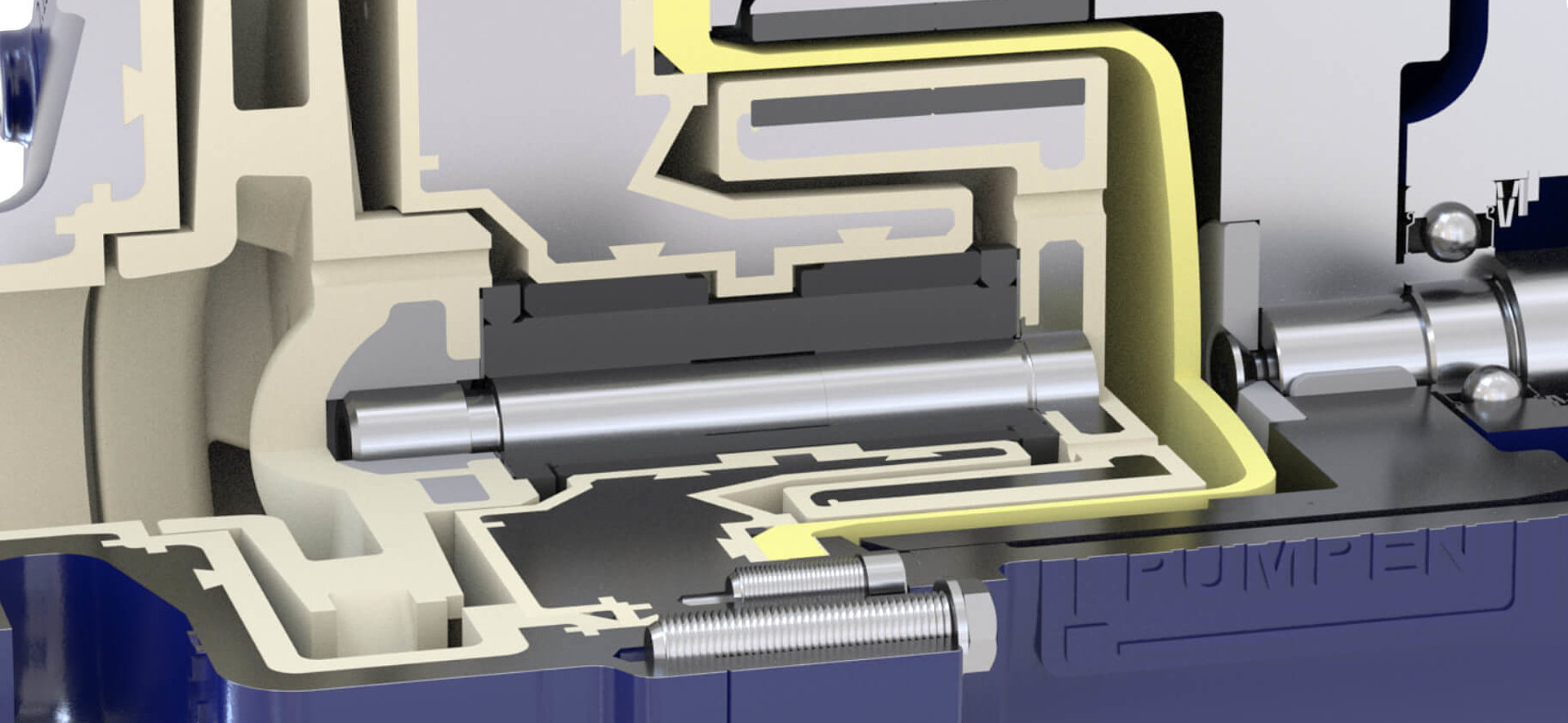
If the plant is to work safely and economically the pump design and sealing system must be perfectly matched with each other. A wide variety of seal variants is available when designing pumps:
| Sealing Type | Description | Key Benefits |
|---|---|---|
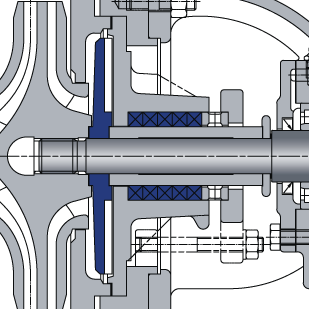 | Hydrodynamic Shaft SealContact‑free and wear‑free sealing for continuous operation. |
|
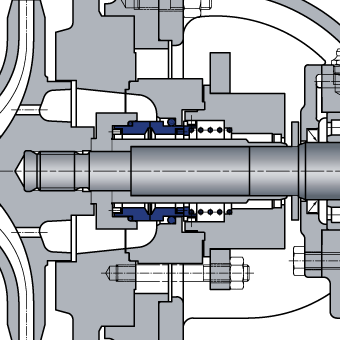 | Mechanical seals provide reliable shaft sealing using spring‑loaded sliding faces and a lubricating film generated by the pumped medium. Available as single or double‑acting designs, they ensure safe operation during runtime and at standstill. |
|
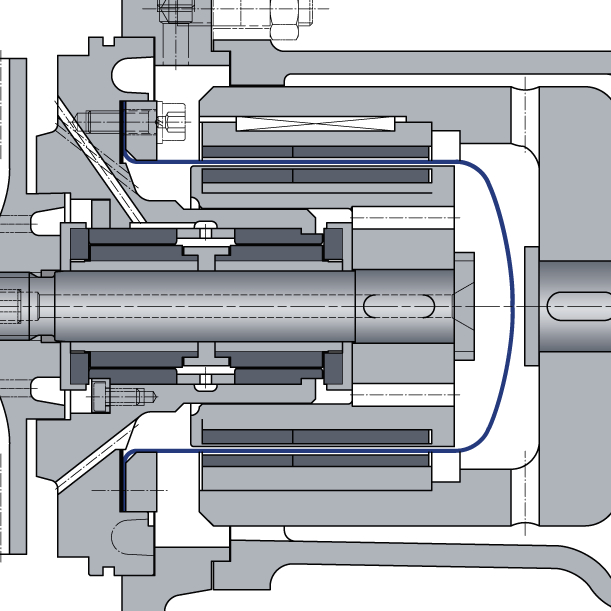 | Magnetic CouplingMagnetic couplings transmit torque contact‑free via permanent magnets and a non‑magnetic spacer can, ensuring a hermetically sealed pump design. |
|
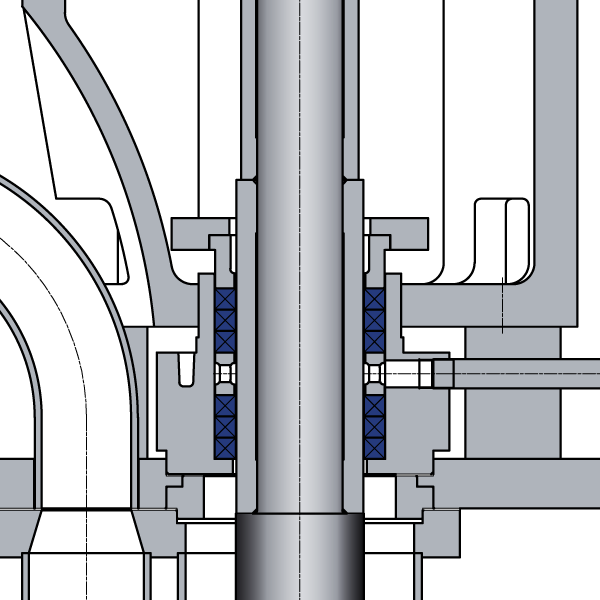 | Stuffing Box PackingPacking glands are a proven sealing solution for special applications. They operate with controlled minimal leakage to cool and lubricate the packing rings. Typical leakage rates are 20–40 drops per minute, depending on operating conditions. Optional lantern rings enable flushing, while various packing materials ensure broad application suitability. |
|
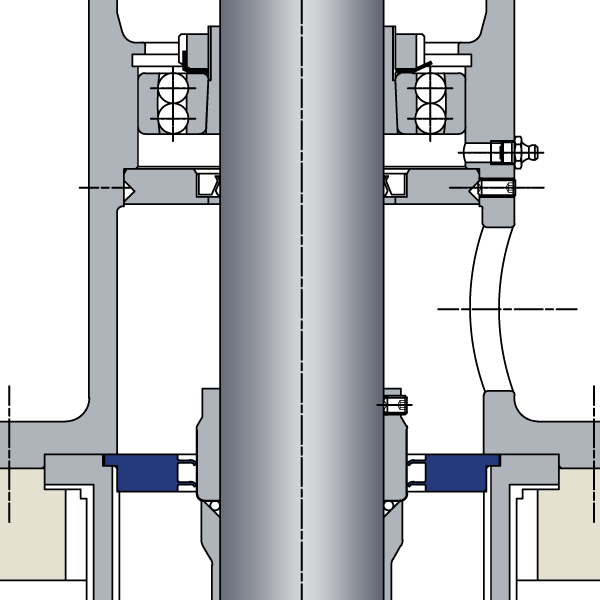 | Lip Ring SealLip ring seals are mainly used on vertical pumps to protect bearings from water splashes, using friction‑optimized or PTFE lips running on hardened shaft sleeves. On horizontal pumps, they are typically combined with single‑acting mechanical seals and also serve as a stationary seal for hydrodynamic shaft seals. |
|
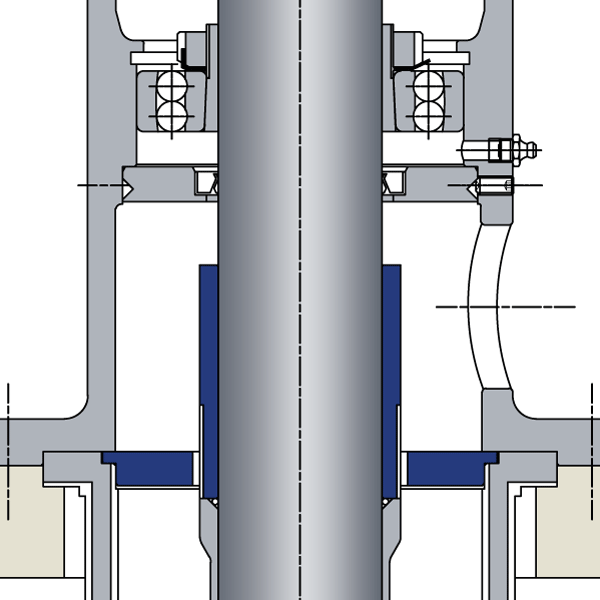 | Labyrinth SealLabyrinth seals protect bearings on vertical pumps using friction‑optimized or PTFE lip seals on hardened shaft sleeves, optionally combined with a grease lock. On horizontal pumps, they are typically used together with single‑acting mechanical seals and also function as a stationary seal for hydrodynamic shaft seals. |
|